

Blood plays a vital role in maintaining the health and functioning of the human body. It carries oxygen, supports the immune system and helps control bleeding. Because of these important functions, changes in blood cell counts can provide valuable information about a person's health.
A Complete Blood Count (CBC) is one of the most commonly performed blood tests. It measures important components of blood, including Red Blood Cells (RBCs), White Blood Cells (WBCs), platelets, hemoglobin and hematocrit, along with other calculated parameters.
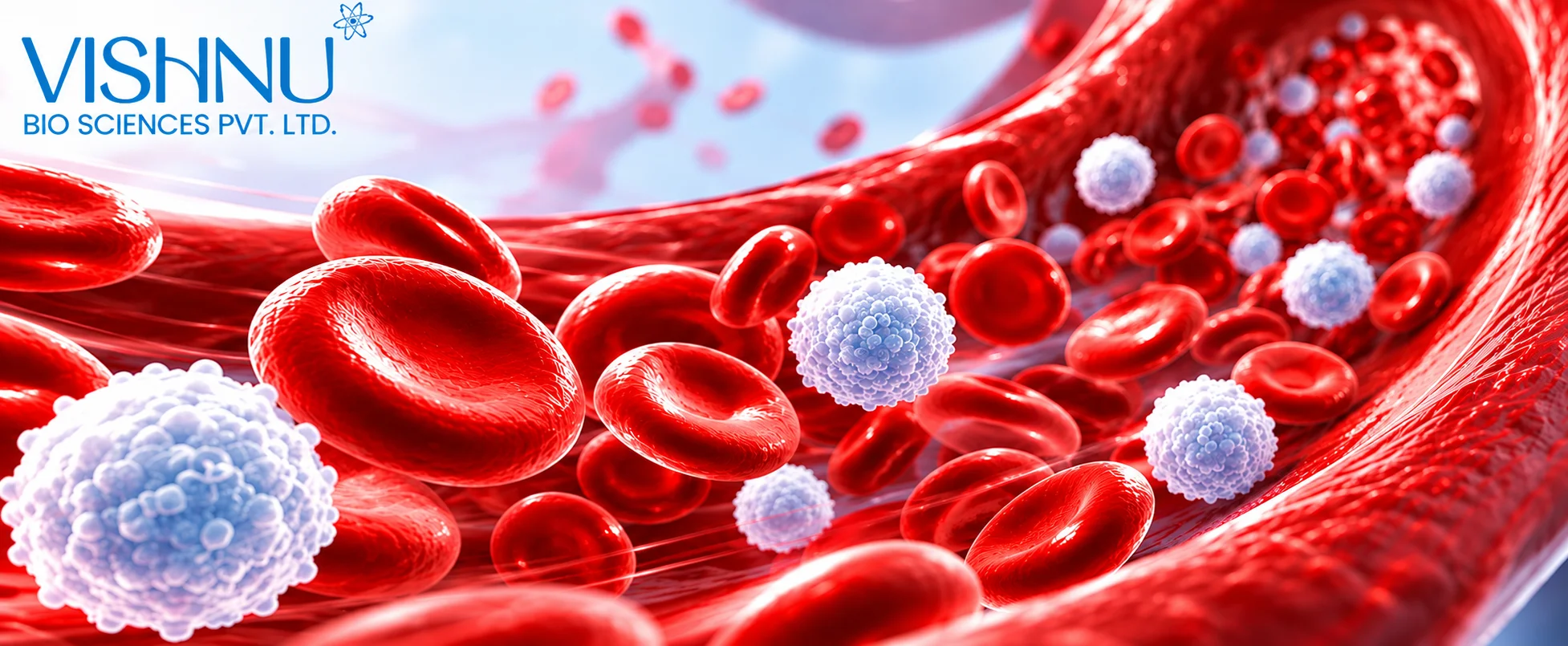
What Are Blood Cell Counts?
The three major cellular components measured in a CBC are:
1. Red Blood Cells (RBCs)
Red blood cells carry oxygen from the lungs to tissues throughout the body.
When the RBC count or related parameters are lower than normal, it may be associated with conditions such as anemia, blood loss, nutritional deficiencies or certain chronic and blood-related disorders.
Possible symptoms of low RBC levels may include:
- Fatigue and weakness
- Shortness of breath
- Dizziness
- Headache
- Pale skin
Higher-than-normal RBC levels can occur for several reasons, including dehydration and certain heart, lung or blood conditions. Some people may experience headache, dizziness, visual disturbances or shortness of breath.
2. White Blood Cells (WBCs)
White blood cells are an important part of the body's immune system and help fight infections and other diseases.
A high WBC count may occur with infections, inflammation, allergic reactions, tissue injury and some blood disorders.
A low WBC count may be associated with certain infections, autoimmune conditions, bone marrow disorders or some medications and treatments.
Possible symptoms associated with abnormalities may include:
- Fever
- Chills
- Frequent or persistent infections
- Body aches
- Headache
- Slow-healing wounds
The symptoms depend on the underlying cause. A WBC result alone cannot confirm a specific disease and may need to be interpreted along with other tests.
3. Platelets
Platelets are small blood components that help the body form clots and control bleeding.
A low platelet count may increase the tendency for bleeding and can be associated with:
- Easy bruising
- Nosebleeds
- Bleeding gums
- Small red or purple spots on the skin
- Prolonged bleeding
A high platelet count can occur with infections, inflammation and certain other conditions and may require further medical evaluation depending on the cause.
What Other Parameters Are Checked?
A CBC does not only count blood cells. It can also provide important information about:
- Hemoglobin (Hb) – the oxygen-carrying protein in RBCs
- Hematocrit (HCT) – the proportion of blood made up of RBCs
- MCV – average size of RBCs
- MCH and MCHC – information about hemoglobin in RBCs
- RDW – variation in RBC size
- WBC differential – distribution of different types of white blood cells
- Platelet parameters – information related to platelets
These results can help healthcare professionals assess conditions such as anemia, infections, inflammatory conditions, bleeding or clotting abnormalities and certain blood disorders.
Which Test Is Used to Check Blood Cell Counts?
The primary test used to evaluate these blood components is the Complete Blood Count (CBC).
A blood sample is collected, typically in an appropriate anticoagulant tube, and analysed in a laboratory. Depending on the laboratory requirement and analyzer type, the test can provide a range of CBC parameters and a differential count of white blood cells.
This is where a Hematology Analyzer becomes an important part of modern laboratory diagnostics.
What Is a Hematology Analyzer?
A Hematology Analyzer is an automated laboratory instrument used to analyse blood cells and generate CBC-related results.
Modern hematology analysers can automatically count and classify blood cells, measure important hematological parameters and provide flags or graphical information that can alert laboratory professionals to potentially abnormal results.
For laboratories handling a significant number of blood samples, automation can help improve workflow efficiency, consistency and turnaround time.
Why Is a 5-Part Hematology Analyzer Important?
A 5-part differential hematology analyzer provides differentiation of the major white blood cell populations:
- Neutrophils
- Lymphocytes
- Monocytes
- Eosinophils
- Basophils
This detailed WBC differentiation provides more information than a basic total WBC count and can support clinical assessment of infections, inflammatory conditions and other hematological abnormalities.
However, hematology analyzer results should always be interpreted by qualified healthcare professionals along with the patient's symptoms, medical history and other relevant investigations.
Our Hematology Solutions
At Vishnu Bio Sciences Private Limited, we provide advanced laboratory diagnostic solutions to hospitals, diagnostic centres and laboratories.
We are associated with Everlife CPC Diagnostics for hematology solutions, including the Dynacount 5D PRO and Dynacount 5D ELITE 5-part differential hematology analyzers.
Dynacount 5D PRO
The Dynacount 5D PRO is a 5-part differential hematology analyzer designed for CBC and detailed WBC differential analysis.
Its features include advanced analytical capabilities and automated flagging that can help laboratory professionals identify potentially abnormal cell populations for further review. The current product information highlights parameters such as CBC measurements, advanced research parameters and 3D scattergram-based visualization.
It is suitable for laboratories, hospitals and diagnostic centres looking for an automated hematology solution with detailed blood-cell analysis.
Dynacount 5D ELITE
The Dynacount 5D ELITE is an advanced 5-part differential hematology analyzer designed for laboratories with higher sample workloads.
It incorporates automated sample loading and barcode scanning, helping reduce manual sample handling and supporting efficient processing of larger batches. Everlife CPC describes the system as designed for high-throughput laboratory environments with consistent and repeatable analysis.
For laboratories where workflow efficiency and automation are important, the Dynacount 5D ELITE can be considered as a comprehensive 5-part hematology solution.
Why Choose Vishnu Bio Sciences Private Limited?
Choosing the right hematology analyzer is only one part of establishing an effective laboratory solution. Reliable product selection, installation, training and after-sales support are equally important.
At Vishnu Bio Sciences Private Limited, we focus on providing diagnostic solutions according to the specific requirements of hospitals, laboratories and diagnostic centres.
Our approach includes:
- ✔ Product Guidance We help laboratories understand their testing requirements and identify suitable equipment.
- ✔ Trusted Diagnostic Solutions We provide solutions from established diagnostic brands, including Everlife CPC hematology systems.
- ✔ Installation & Training Support We help customers with the implementation of laboratory equipment and user training.
- ✔ Application-Based Solutions Instead of simply supplying an instrument, we focus on understanding the laboratory's workload, testing requirements and workflow.
- ✔ Complete Diagnostic Support Our portfolio covers multiple diagnostic segments, allowing laboratories to explore solutions for different testing requirements through a single diagnostic partner.